Sit-Stand Desk Benefits: 5 Reasons for a Healthier Team
Sit-stand desk benefits: 5 reasons for a healthier team
Alternating between sitting and standing increases focus and comfort throughout the day.
Health is the new productivity hack: start today
Just imagine: it is the middle of the afternoon and the dip sets in. You see your team members sinking behind their desks, the backrest far away, their eyes half closed. Sitting still for long periods comes at the expense of energy, focus and health.
This is exactly why investing in a sit-stand desk is no longer a luxury but a strategic necessity. It is not only about an adjustable top; it is about fundamentally changing the working culture into one that puts movement and ergonomics at its heart. Companies that understand this — from start-ups to SMEs — immediately see the benefits in the fitness, focus and output of their employees.
What is a sit-stand desk (NPR 1813:2025 explained)
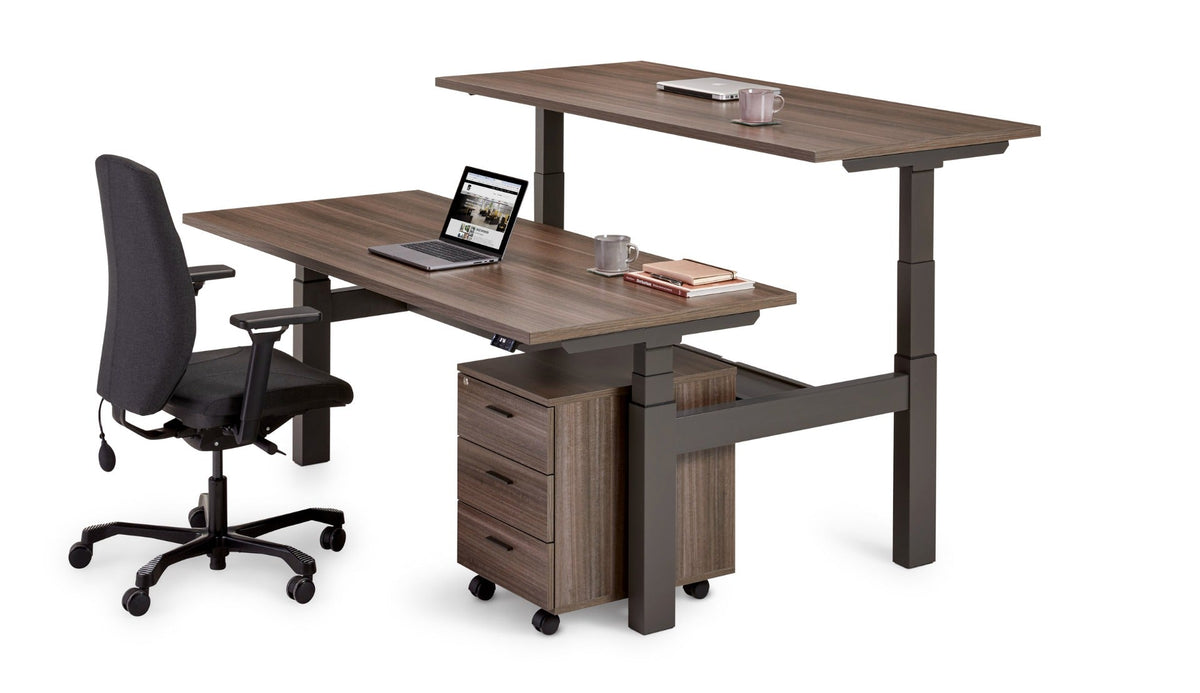
A sit-stand desk is a workstation that gives you and your team the flexibility to switch easily between sitting and standing work during the day, often with the help of an electric motor.
In the context of occupational health and safety and the new standards, this type of desk is the de facto standard for an ergonomic workstation. The latest standards, such as the NPR 1813 (the Dutch Practice Guideline for office furniture), raise the bar. A modern sit-stand desk not only has to be easy to adjust, but also has to meet the specific dimension and stability requirements in order to safeguard the user's health – essential in a time of hybrid working in which the office has to be the 'healthy' hub again.
Ergonomics fact: Per hour, allow roughly 40 minutes of sitting, 15 minutes of standing and 5 minutes of moving or walking. A sit-stand desk makes this seamlessly possible.
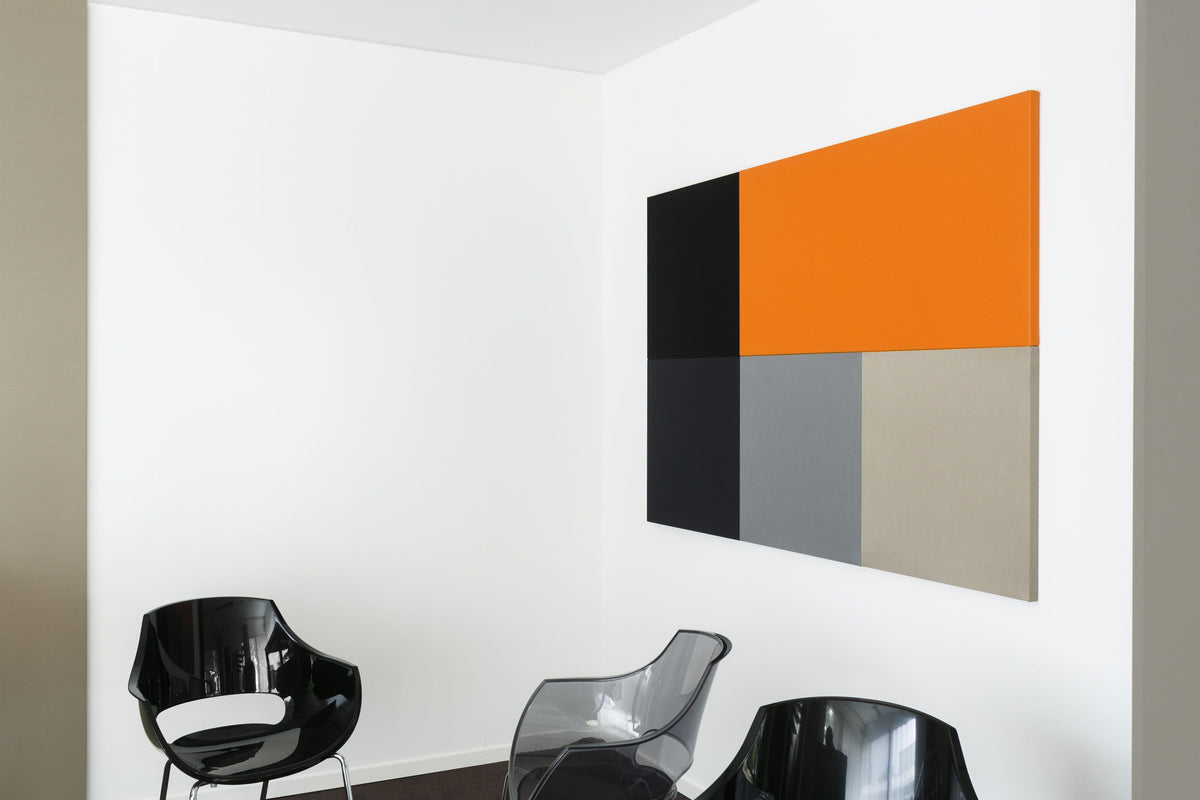
A partition screen keeps attention on your own screen.Combine with a monitor arm and an ergonomic chair for the best result.
The 5 crucial sit-stand desk benefits for your team
The impact of an adjustable desk reaches further than a better posture alone. These are the five most significant sit-stand desk benefits that contribute directly to business objectives:
1) Less absenteeism and fewer pain complaints
The most direct benefit is the prevention of complaints that arise from inactivity. The alternation activates the muscles and reduces the pressure on the spine.
Fewer back and neck complaints: Prolonged sitting considerably increases the pressure on the lower back. Standing or active sitting reduces this.
Better blood circulation: Standing helps the blood flow and supports a healthier movement pattern throughout the day.
2) Higher productivity and focus
A seated posture can lead to a dip in the afternoon. By standing, the body stays more active.
Increased alertness: Working standing up activates the core muscles, which helps you be more alert and less drowsy.
Shorter meetings: Meetings held standing up generally stay shorter and more compact than seated ones.
3) A more active and collaborative office culture
Faster ad-hoc discussions: Colleagues step over to each other's desk for a quick word more easily when the other person is standing. That lowers the threshold for communication.
"Stand-up meetings": Standing meetings are shorter and more efficient. A sit-stand desk encourages this culture.
4) More movement through the day
A more active working pattern: Working standing up asks a little more of your body than sitting. A small but cumulative effect in the long term.
Fewer energy dips: Alternating between sitting and standing helps break prolonged inactivity and keeps your energy level more stable.
5) A future-proof and attractive employer
Meeting occupational health and safety requirements: You not only comply with the law, you are out in front. That shows leadership in the well-being of your staff.
Attracting talent: Young professionals actively look for employers who take their health seriously. An ergonomic office is a powerful recruitment tool.
Common mistakes or misconceptions about sit-stand desks
The switch to dynamic working is simple, but there are pitfalls that can undo the effect.
"Many people think they have to stand for the whole hour." That is wrong. An abrupt transition from whole days of sitting to whole days of standing leads to fatigue in the legs and feet. The key is alternation: keep to the 40–15–5 rule.
"A sit-stand desk is enough for ergonomic working." A desk is the basis, but the chair (NEN-EN 1335), the monitor arm and above all the user instruction are just as important. Without the right adjustment and training, complaints persist. Also take a look at our ergonomic office chairs.
"You do not need a mat to stand on." An anti-fatigue mat is advisable if you stand for longer periods at a stretch. It eases the pressure on your feet and improves posture.
Practical implementation: the 3 steps to a healthy office
A successful roll-out requires more than the purchase alone. Here is a step-by-step plan you can apply this week:
Step
Action
Result
1. Assess the need
Ask the team: where do you experience complaints? Use a short, anonymous survey.
A targeted budget request and buy-in.
2. The "pilot & instruction"
Start with a small pilot and give every user a short personal instruction (important!).
A correct starting position and immediate feedback.
3. Embed the habit
Put up reminders (post-its/software) to change posture. Make 'standing meetings' the norm for short updates.
Behaviour change and a lasting result.
A look ahead: the dynamic office 2025 and beyond
The trend is clear: the office of the future is dynamic, healthy and sustainable. The focus is shifting from presence to well-being and performance.
BNR Kantoor expects sit-stand desks to become the new basis. Alongside that we see a strong integration of technology. Think of 'smart desks' that set the ideal height independently on the basis of the user (via an app or ID card) and that send notifications when it is time to change posture. Sustainability is crucial here; furniture has to be circular and carefully produced. That guarantees a long service life and a low ecological footprint. Today's investment is tomorrow's sustainable productivity gain.
Do you want a future-proof and healthy workplace too?
The switch to ergonomic working has a direct impact on the well-being and productivity of your team. Let our experts advise you. Discover the possibilities, from advice to full implementation of sit-stand solutions, and how you can comply with the latest occupational health and safety guidelines straight away. BNR delivers throughout the country; on-site advice, a fast response and installation by our own team are provided within approximately 50 kilometres of Moordrecht.
The ideal height is always personal. Sitting: your feet flat on the floor and your forearms relaxed and horizontal on the desk. Standing: the top of your monitor at eye height and your elbows relaxed on the top again.
Which occupational health and safety rules apply to a sit-stand desk?
In the Netherlands the desk has to comply with NPR 1813 or the European standard NEN-EN 527. The guide value for the adjustment range is approximately 65–130 cm, so that both short and tall employees can work ergonomically.
How often should I stand or sit with my sit-stand desk?
Per hour, allow roughly 40 minutes of sitting, 15 minutes of standing and 5 minutes of moving, for example by walking to the printer. This pattern breaks prolonged inactivity most effectively.